Fellow Profile: Zach Dean

- G-TEAMS Cohort: 2011-12
- Graduate Program: Biomedical Engineering
- Teacher Partner: Liz Escarcega-Tapia
- School: Pistor Middle School
- Grade level: 7-8
- Topics: Pre-Algebra and Algebra I
"An expert is a man who has made all the mistakes, which can be made, in a very narrow field." - Niels Bohr
This quote from Niels Bohr is important to me and to my work in the classroom because students (including myself, sometimes) are often discouraged by failure. It is very important to see failures as a positive-they are lessons that teach us what not to do in the future. Learning from their mistakes is a significant step that the students take toward getting better at math and science.
Research Interests
Zach Dean is a graduate student in the Biomedical Engineering Graduate Interdisciplinary Program at the University of Arizona. His research interests are in the area of cancer, wound healing, biomedical device design, and micro- and nano- technology. Zach has received his bachelors degree in Biosystems Engineering from the University of Arizona and masters degree in Biomedical Engineering from the University of Arizona.
Classroom Activities
Zach is working at Pistor Middle School with Liz Escarcega-Tapia. Zach’s goals for his classroom involvement include:
- Relating class material to real-world applications. For example, during a lesson where the students were required to find the slope of a line, Zach showed them that he had recently solved a homework problem at the University of Arizona where he was required to find the slope of a line to measure the materials in a silicon wafer. Silicon wafers are used to make micro-devices, such as accelerometers, that are used in cars as sensors that deploy airbags. By demonstrating the problem to the students, they not only saw that the things that they were learning are used later on in school, but they also saw that they are used for real-life applications.
- Building a diverse connection between math and science. As a student in biomedical engineering, Zach has studied a wide variety of subjects; this allows him to bring in material from new subjects every week. Seeing math applied in a variety of fields helps students match their interests to the material covered in class.
- Exploring the experimental side of math/science. During a science unit on states of matter, Zach brought in dry ice, and, with the help of Pistor science teacher Diana Wolf, showed the students that just because an object is classified as an "ice" doesn't mean that it behaves the same as another "ice." Comparative experiments between dry ice and ice cubes (H2O) were performed; they included: 1) showing the students that dry ice can blow up a balloon placed over a water bottle, while ice cubes can't. 2) Showing the students that dry ice can create bubbles when placed in a soapy water bath, while ice cubes cannot. 3) Showing the students that the "fog" from dry ice can put out a candle, while ice cubes cannot; (the "fog" from dry ice is cold CO2 condensing the water in the air into water vapor). 4) Showing the students that dry ice can float on a hot plate like a hover craft, while ice cubes simply melt. 5) Showing the students that a penny placed on dry ice makes a screeching noise, while it does not make a sound when brought into contact with ice cubes.
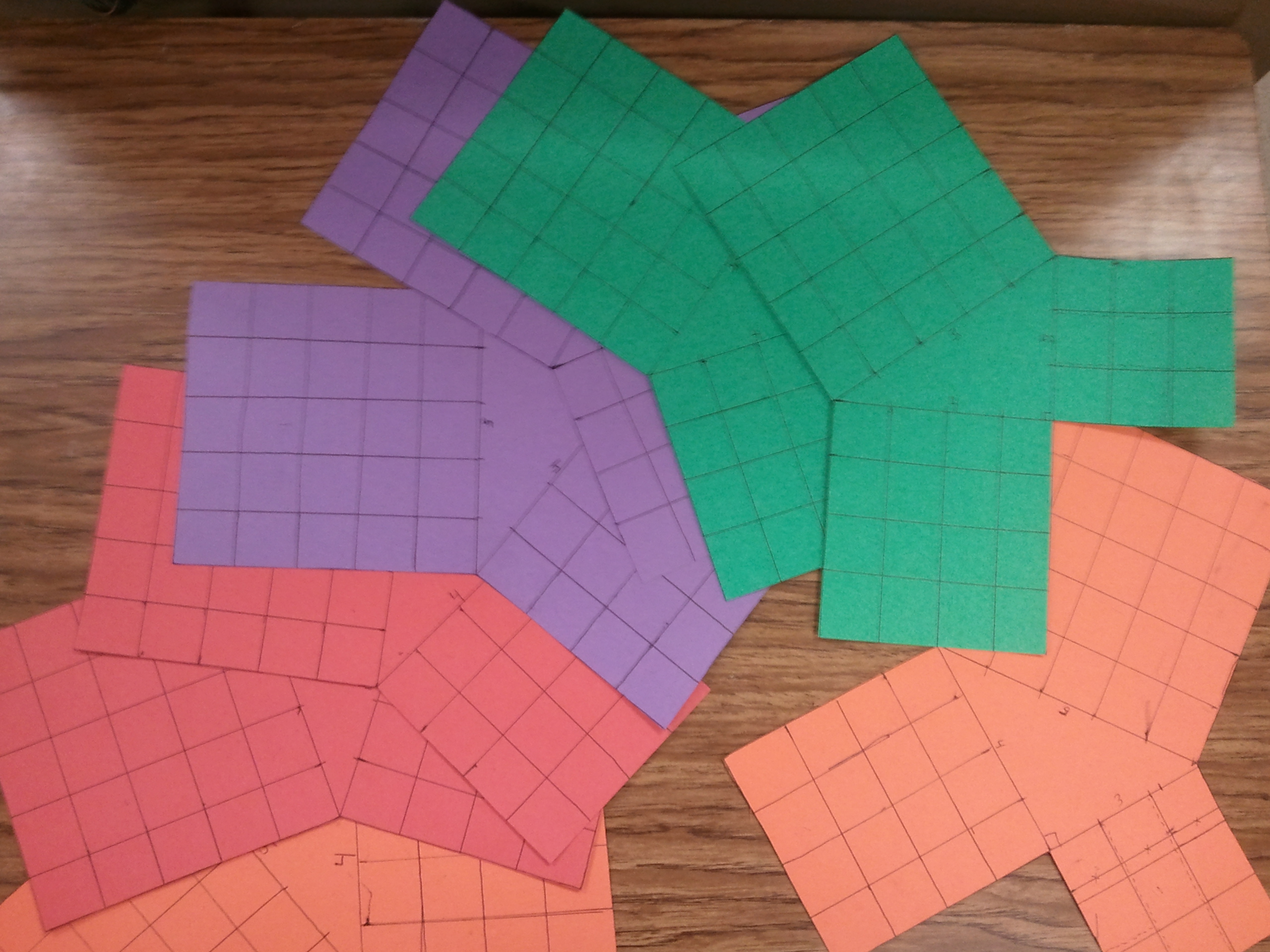
- Proving math concepts through activities. During the unit on the Pythagorean Theorem, Zach brought in cutouts for the kids to work with and prove the theorem. Since the Pythagorean Theorem states that a2+b2=c2, the kids would see that the literal square of side "a" plue the literal square of side "b" could fit into the literal square of side "c" in a triangle. This activity was a great way for the students to learn, particularly the more visually-inclined students. It also took many lessons of build-up to work properly, and Liz Escarcega-Tapia deserves a great deal of credit for seamlessly building this activity into her normal lesson plans.
Lessons Learned
Working with students at Pistor and observing Mrs. Escarcega-Tapia has greatly improved my ability to communicate mathematical ideas as well as improve my ability to hold the attention of a group. Previously, much of my teaching was done in a laboratory setting, so learning to make lessons interesting and different has been a big focus of my time at Pistor.
For example, my first lesson was a Powerpoint of my research, although the material was geared toward middle school students. The kids seemed interested; however, not many of them remembered my lesson down the road (suggesting that the lesson had not set in). Weeks later, though, I was not using Powerpoint and I was still holding the kids’ attention when writing on the white board. In addition, I noticed that the kids were retaining my lessons weeks after I had explained them. One example of this occurred when the class was working with fractions and percents. The class was struggling to understand questions that asked (for example), “Fifty Is what percent of 750?” I explained to the students that they should think of the problem as a vocabulary problem because each word in the question corresponds to a math symbol. For example, the word, “of,” corresponds to a multiplication sign. Thankfully, when a similar problem came up, the kids still recalled my lesson weeks later.
I have also been able to improve my ability to get the students to focus on their work in the classroom. One example of this involves my actions while the students do their class work. When I first arrived at Pistor, I would walk around with a portable white board and give the students examples or strategies that they could use to figure out a problem (I would never give them the answer, though). I found later on that if I actively work on the problems myself while the students are working on the problems (in addition to helping them with their work), then the students are more motivated to finish their work in a more focused and timely manner.
Teaching Materials
- Research presentation (PPT)
- Lesson plans
- Integers: Introduction and Absolute Value
- Fractions I: Part of Whole and Equivalent Fractions
- Fractions II: Equivalent Percent and Decimals
- Pithagorean Theorem activity
- Cutouts
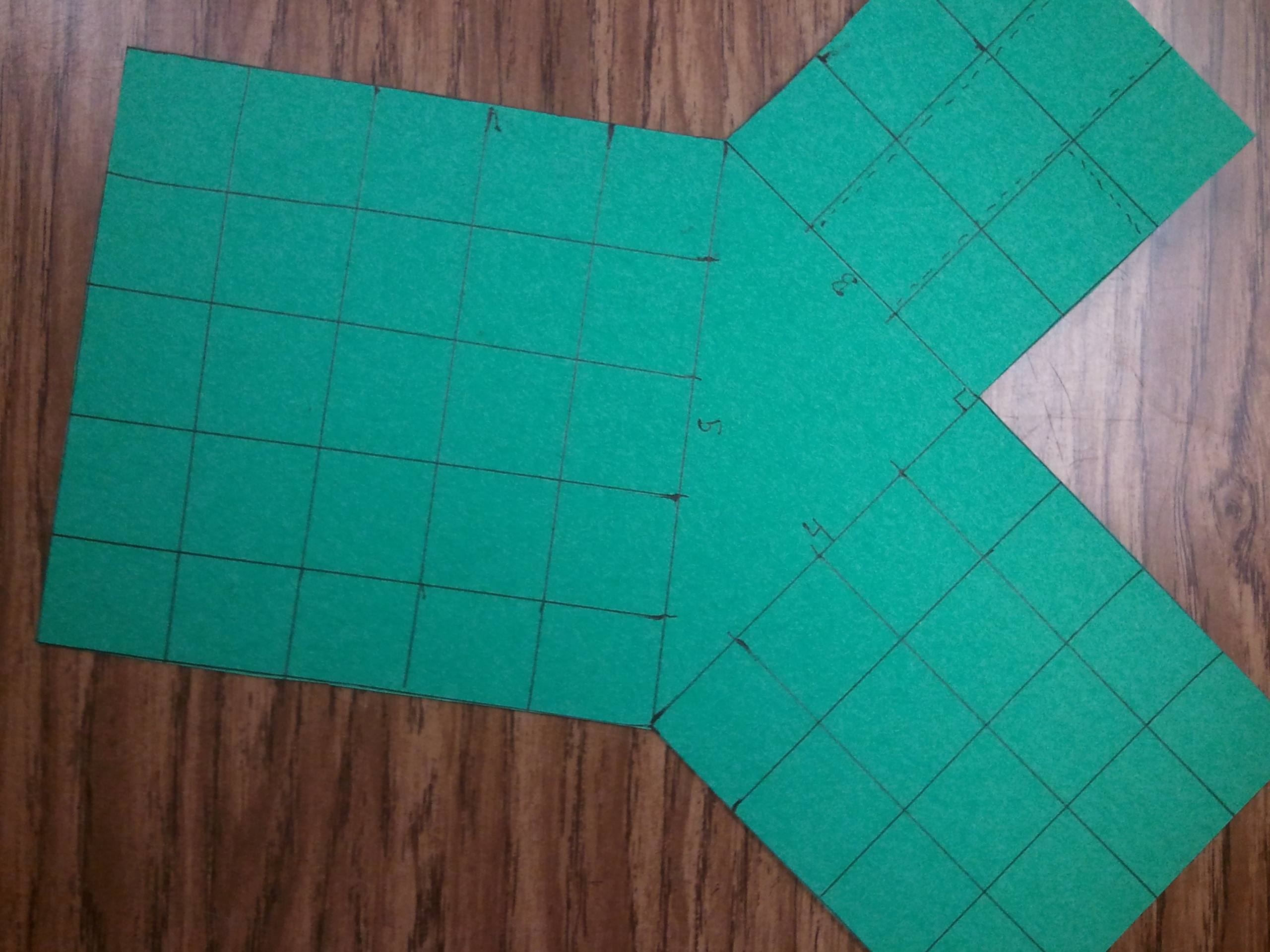
- Finished squares
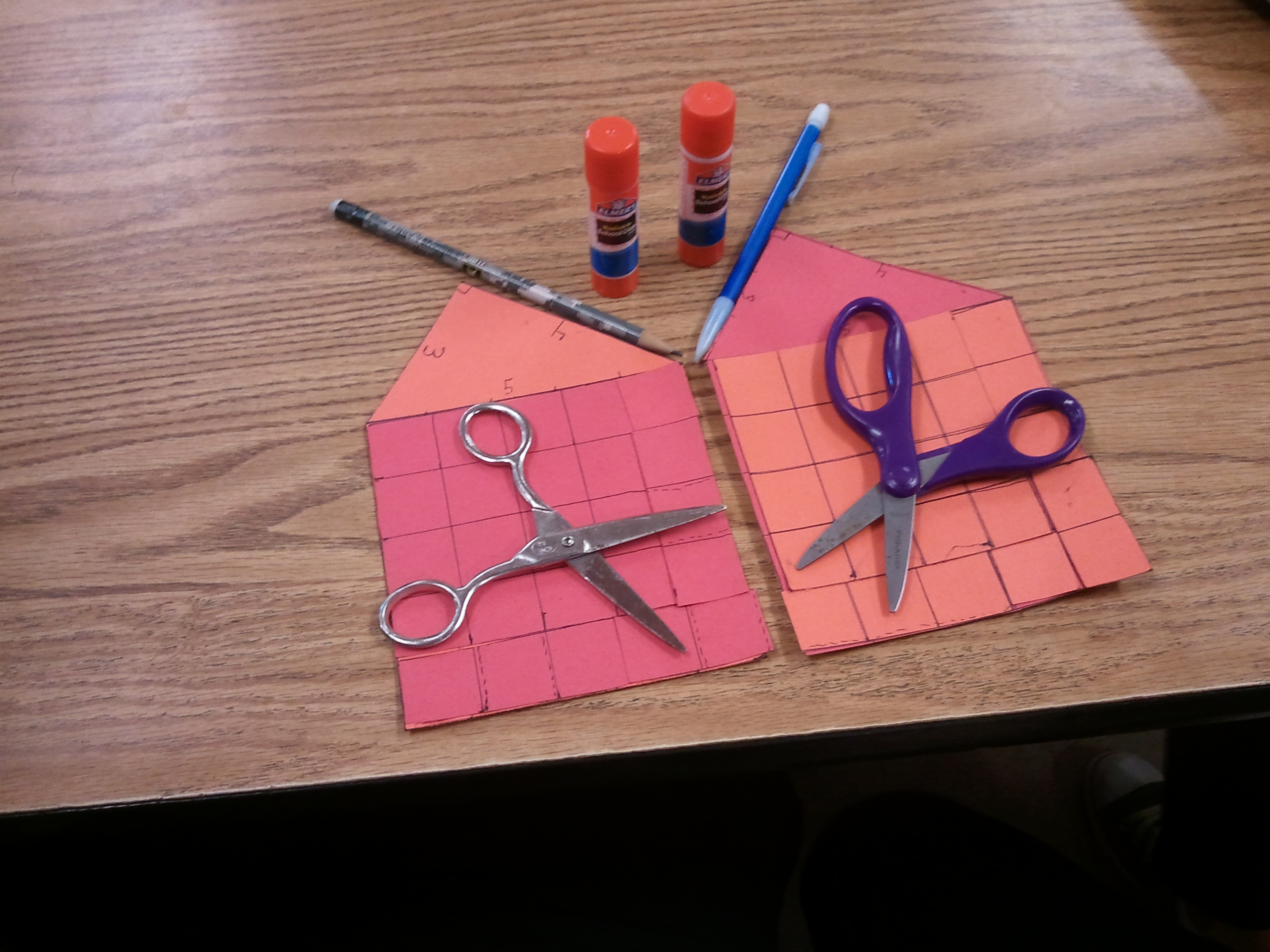
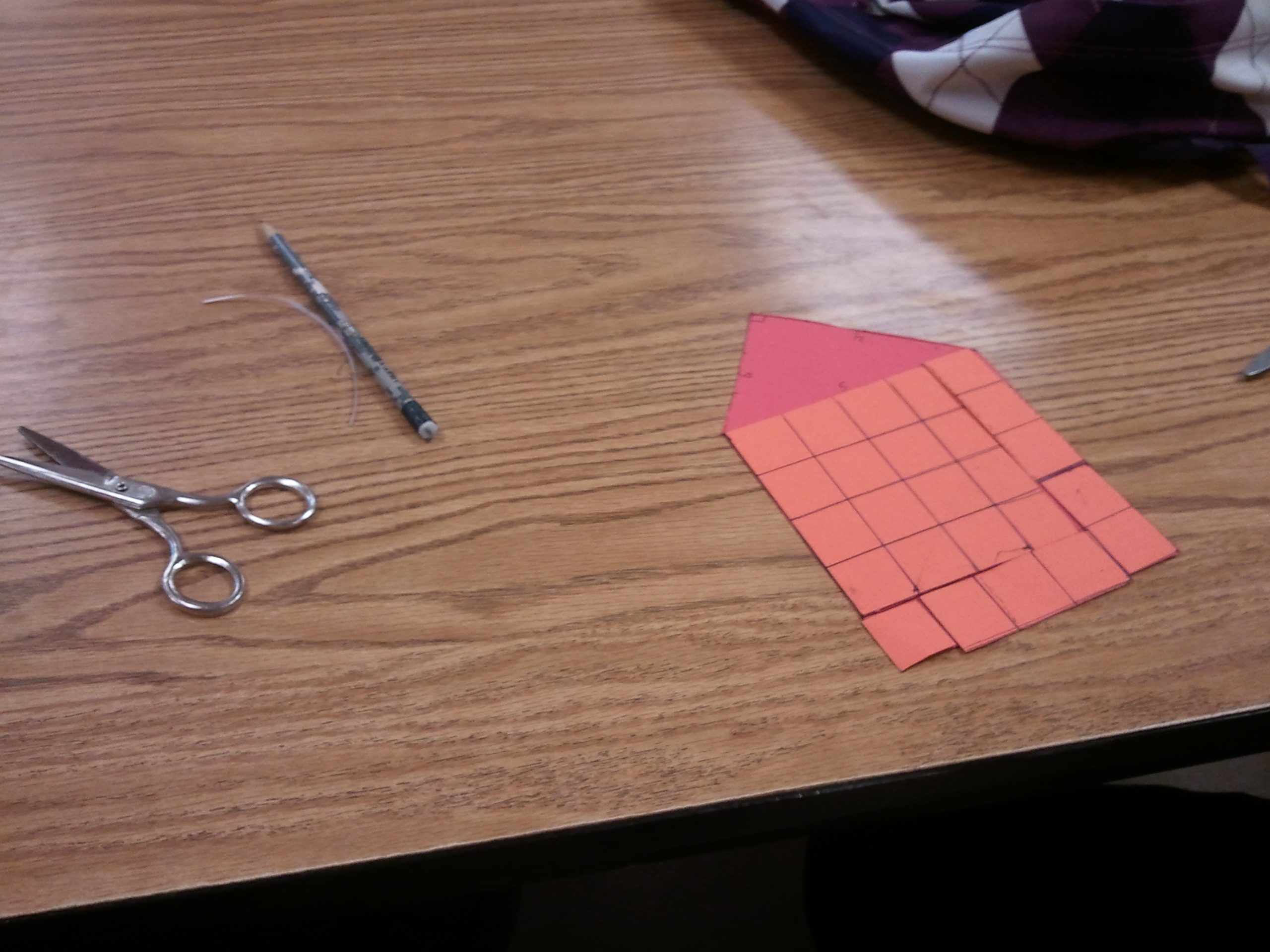
- Students working on the Pythagorean Theorem squares
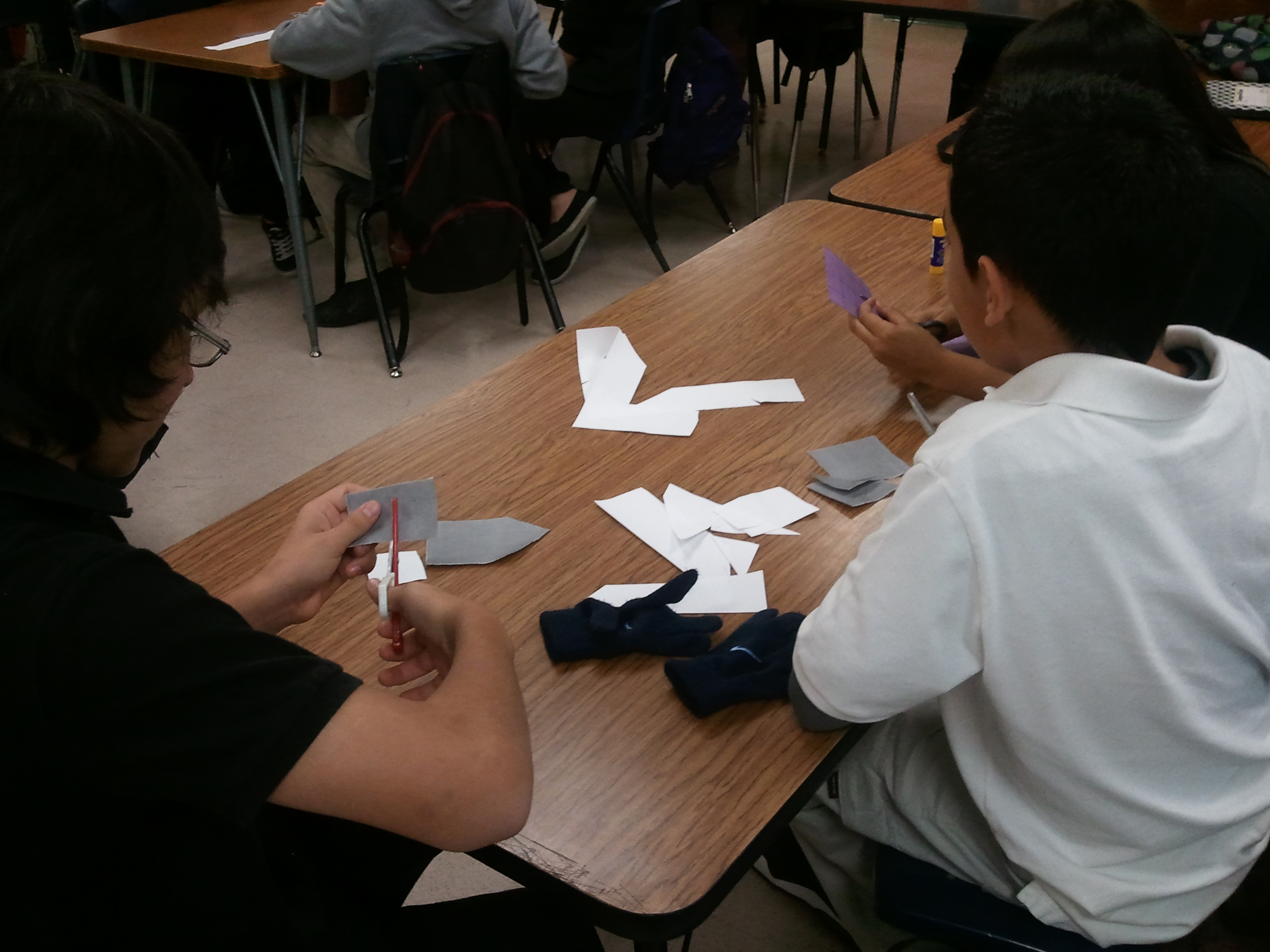
- Cutouts
- Algebra puzzle activity
- Cutouts
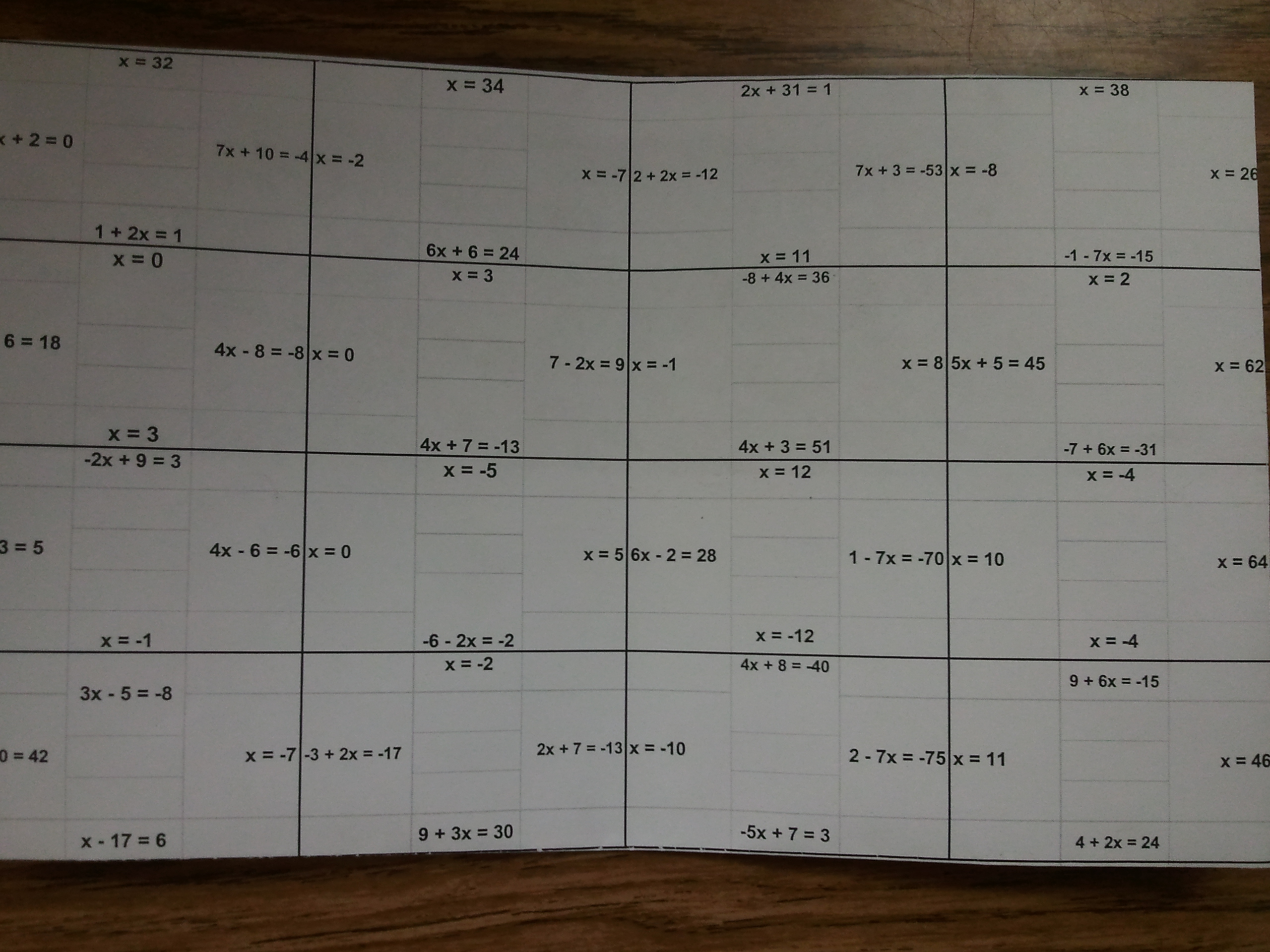
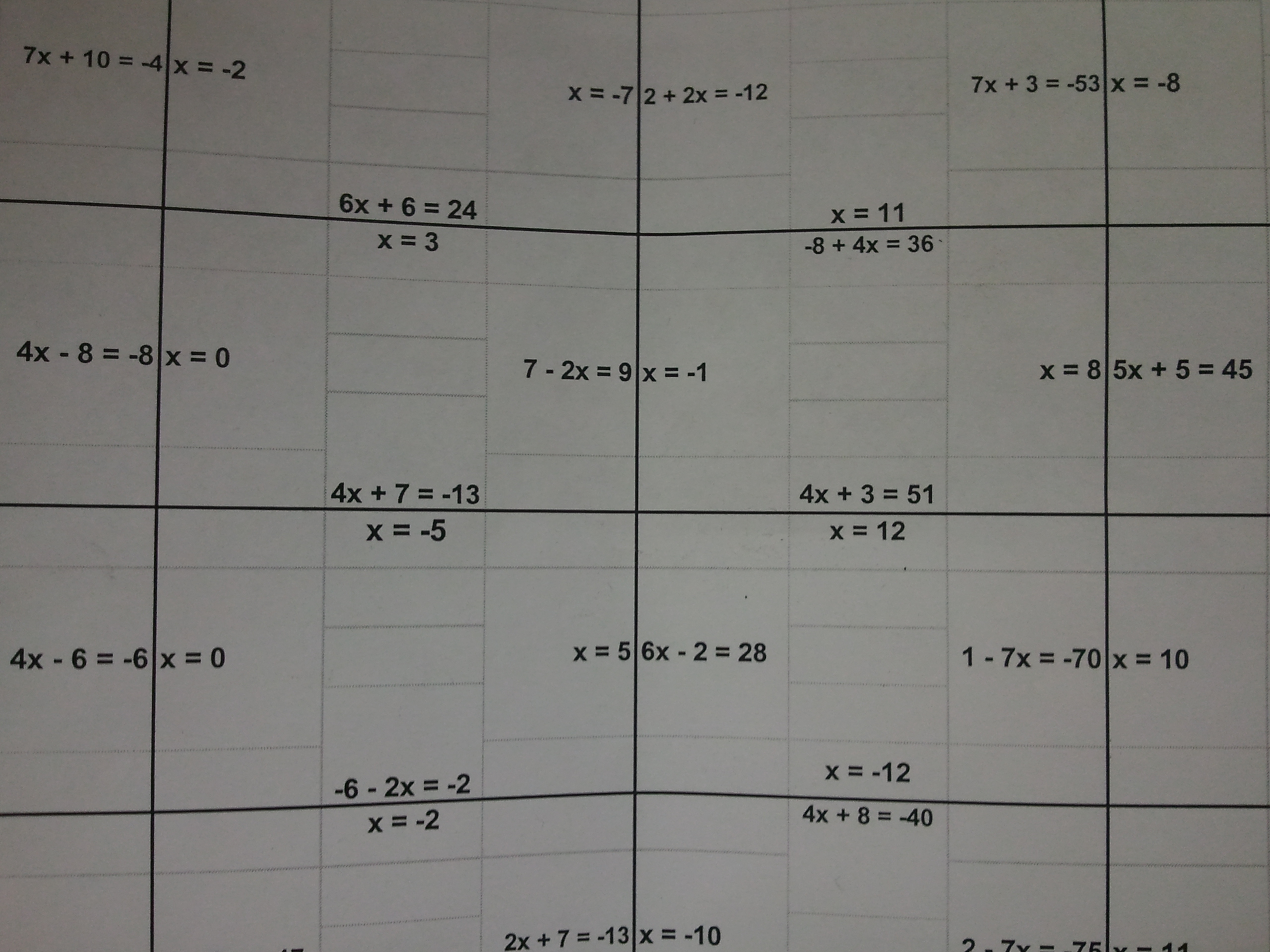
- Students working on the algebra puzzle activity
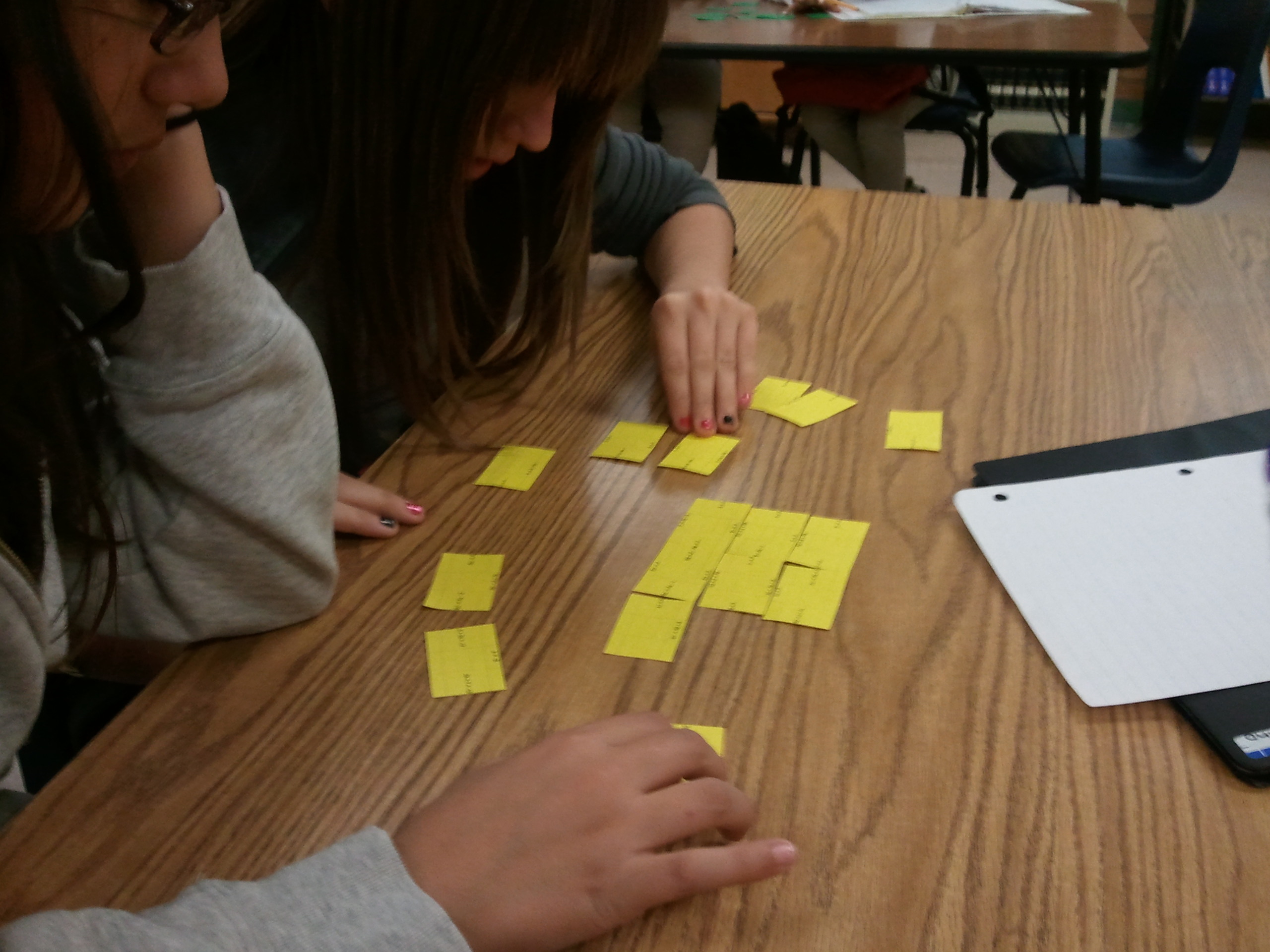
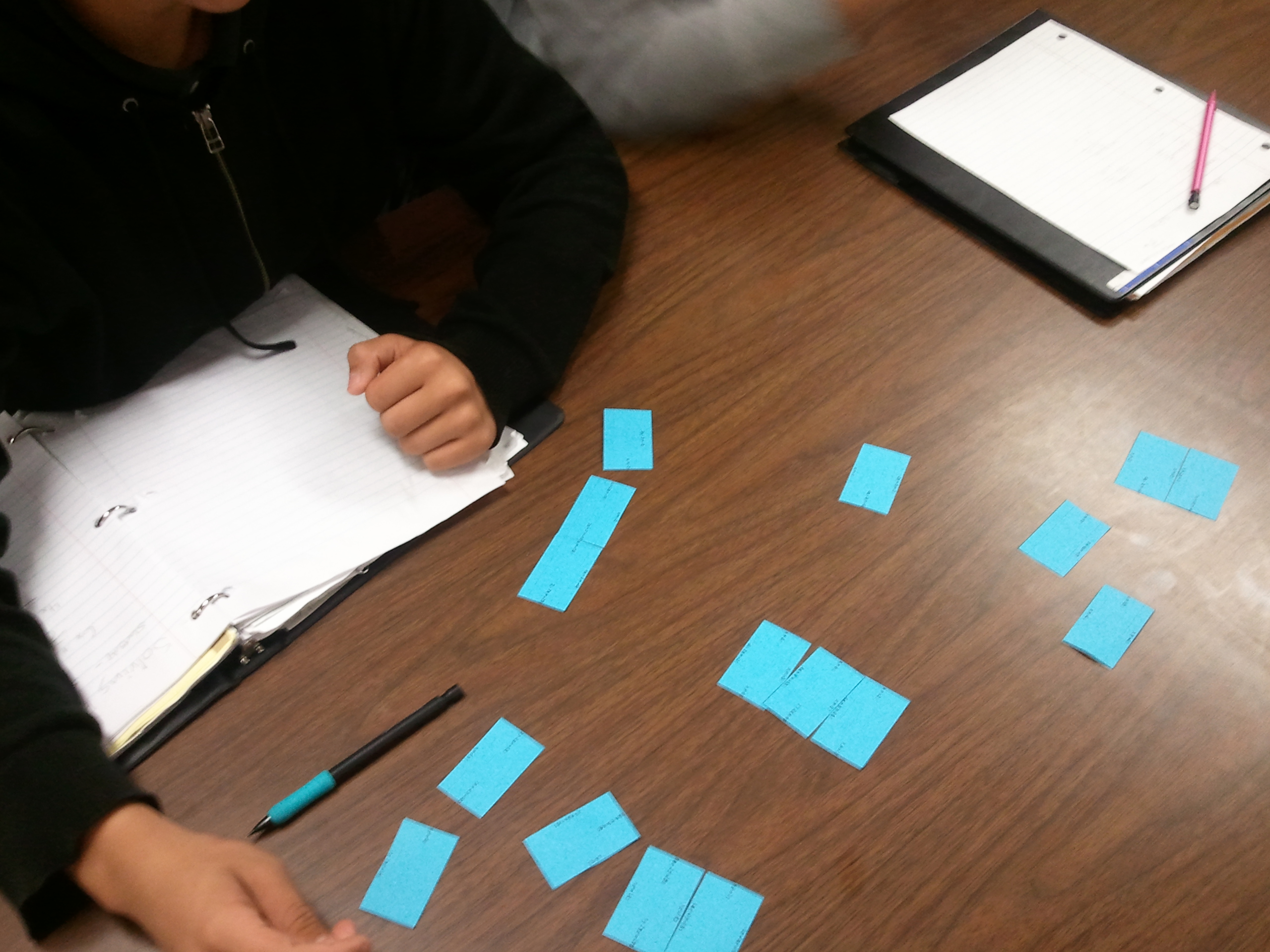
- Cutouts
- Soda-Mentos rocket cars