
Fellow Profile: Rebecca Stockbridge

- G-TEAMS Cohort: 2011-12
- Graduate Program: Applied Mathematics
- Teacher Partners: Sarah Clements & Stephanie Hunley
- School: Peter Howell Elementary School
- Grade level: 4
- Topics: Mathematics & Science
"Everyone can benefit from the rigor and clarity of mathematical thinking."
Research Interests
Broadly speaking, Rebecca is interested in developing methods for decision-making under uncertainty. Her research focuses on stochastic optimization, which combines ideas from the fields of optimization, probability, and statistics to model situations that involve unknown quantities. Examples of stochastic optimization models include portfolio optimization, where the goal is to create a portfolio of stocks and bonds that provides a minimum return with high probability, despite not knowing the specific behavior of the stock market, and power generation, where the schedule of power provided is determined under uncertain demand and electrical line capabilities.
Classroom Activities
Rebecca has been working with 4th grade teachers Sarah Clements and Stephanie Hunley at Peter Howell Elementary School. Together, they have been focusing on developing students' mathematical maturity and problem solving abilities. Rebecca and her teachers have introduced the following new activities into the classroom:
- Challenge Problem of the Week: a weekly brainteaser to encourage students to engage with and write about mathematical thinking. Students who clearly explain their thinking about the week's problem are entered into a prize drawing.
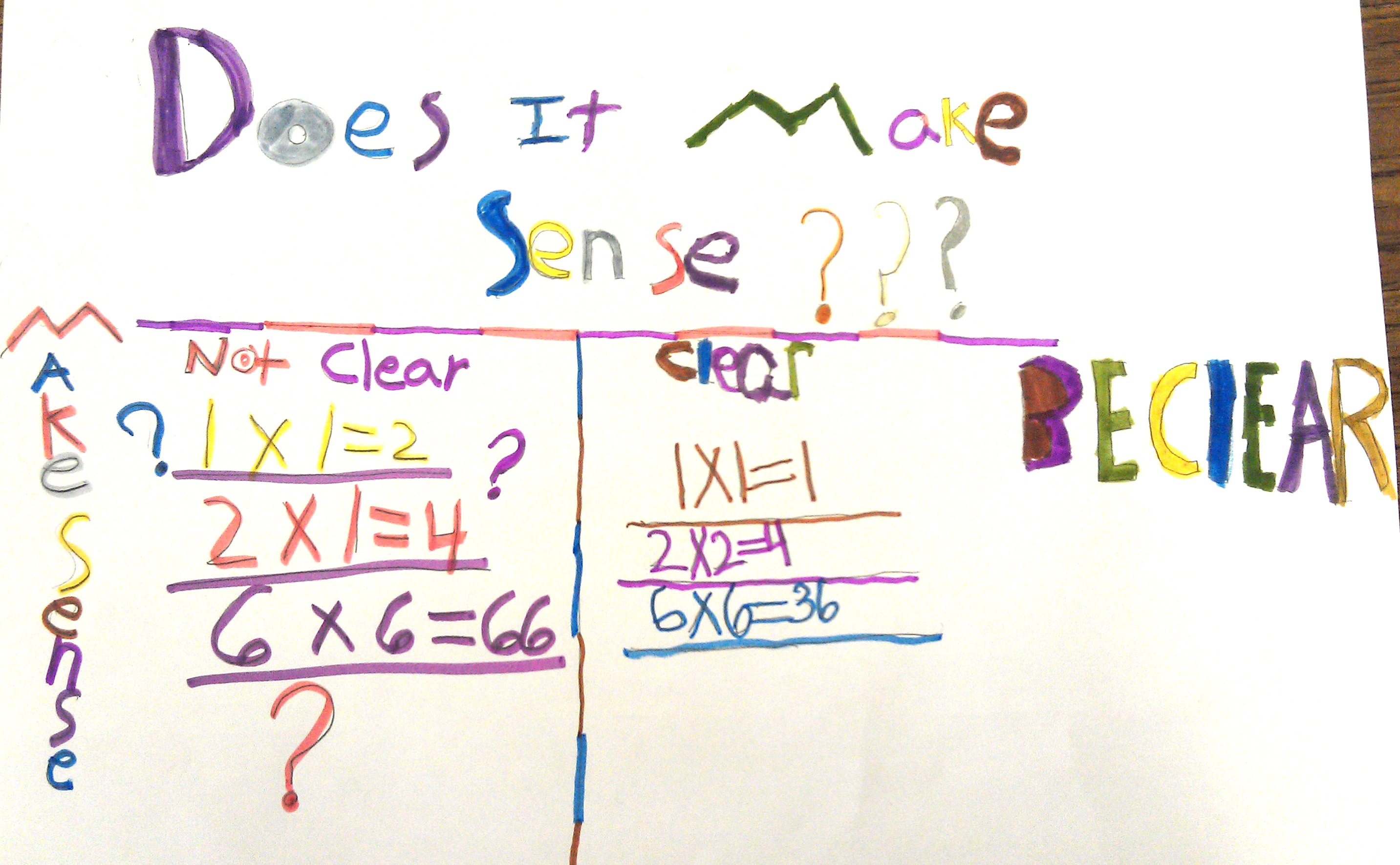
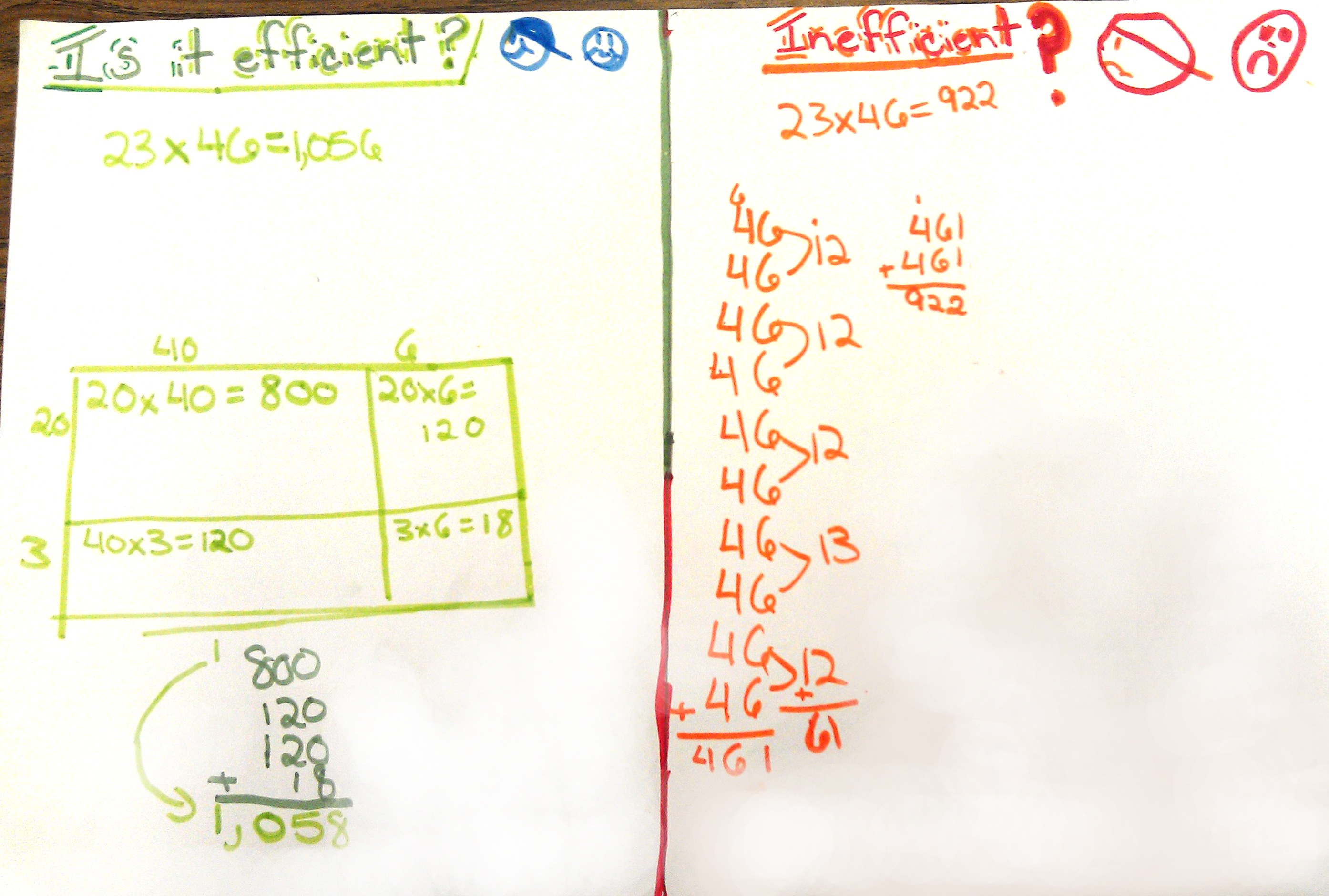
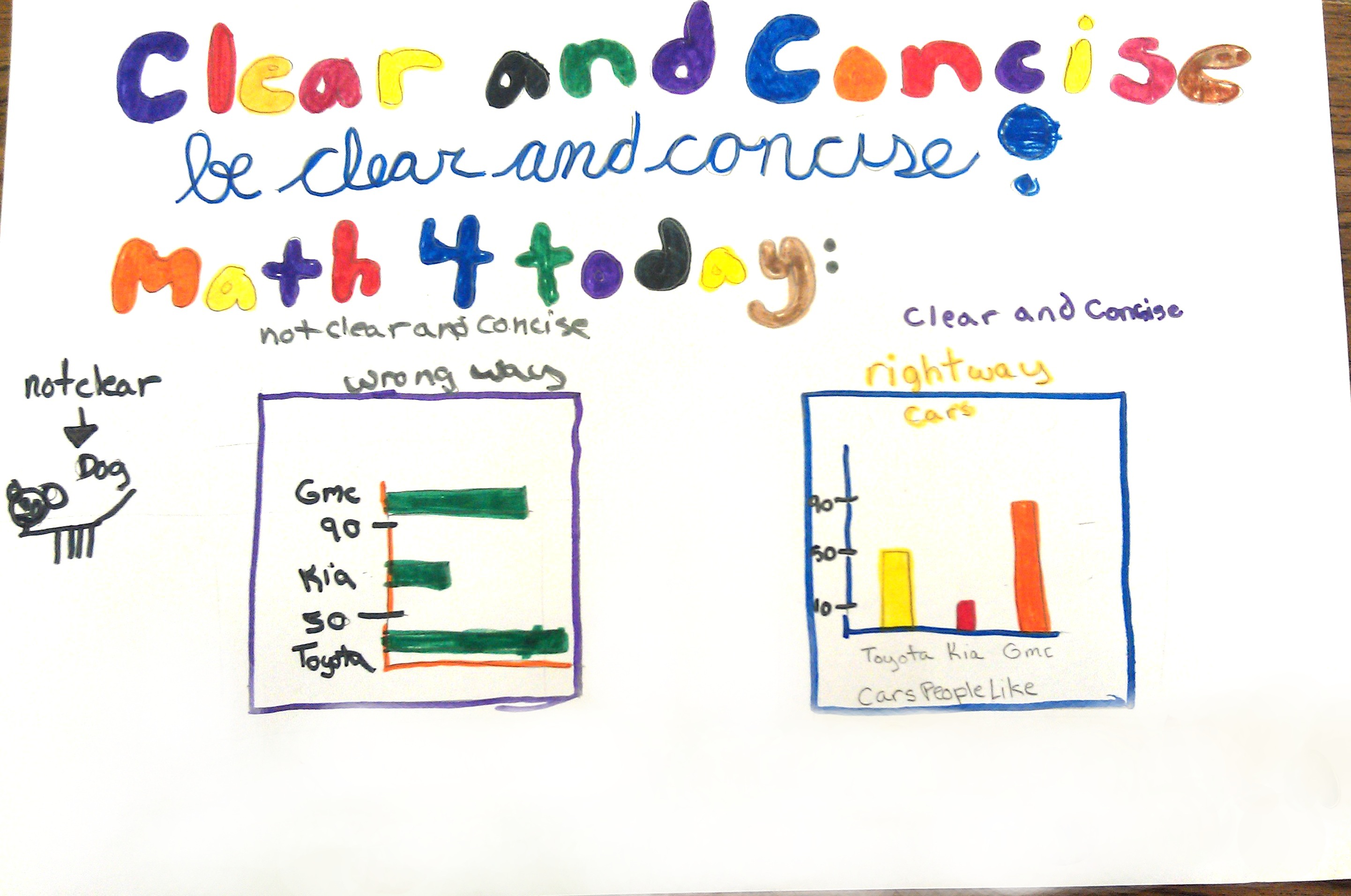
- Monster Math Methods: student-friendly statements of the Common Core mathematical practice standards. Students participate in activities designed to introduce them to different practices, such as perseverance and using what you know to help with what you don't know. For example, to motivate the value of explaining your thinking, students had to prepare a lesson plan and teach third-graders about multiplication.
Rebecca also created the card game Math Masters Go Fish, where students learn biographical facts about famous mathematicians. She alternates between teaching and assisting small groups of students during class time.
Lessons Learned
I have really enjoyed learning about the structure and curriculum of an elementary school classroom. Howell uses the Investigations program for math, and it has been very exciting to watch the students deepen their understanding of math through the inquiry-based approach. In 4th grade, students focus on breaking apart problems into manageable pieces and then putting the pieces back together - an essential strategy for mathematical research. Students are also encouraged to place concepts such as multiplication and division in a real-world context. For example, an assessment question on multiplication might be "Write a story problem that represents 4 x 6." This type of question measures not just if students know the answer to 4 x 6 but also if they understand the situation being described in mathematical language. I plan to use this higher-level type of assessment in my future teaching.
My teachers have taught me a great deal about how to effectively engage students in learning. Rather than lecturing at the board, Sarah and Stephanie introduce topics and further discussion via all sorts of methods, including skits, partner discussion, writing, and class sharing. As Howell is an OMA Gold school, arts integration also plays a key role in lesson activities. When working on division recently, students were asked to write scripts and act out division stories to the rest of the class, who then had to guess the problem. We have also used singing and dancing along to songs to motivate some Monster Math Methods.
Finally, my classroom management skills have improved immensely. It is quite a challenge to keep twenty-five fourth-graders on task and focused throughout the day. The goal is to encourage excitement and enthusiasm while directing students' energy towards learning. Strategies I have learned include using catchphrases where students must freeze when they hear them, providing clear directions so students don't wander off in confusion, and consistently reminding students to respect the teacher or classmate speaking.
Teaching Materials
- Lessons
- Challenge Problem of the Week
- Monster Math Methods
- Description of activities (pdf)
- Student Work:
- Does it Make sense?
- Be efficient
- Be clear and concise
- Persevere
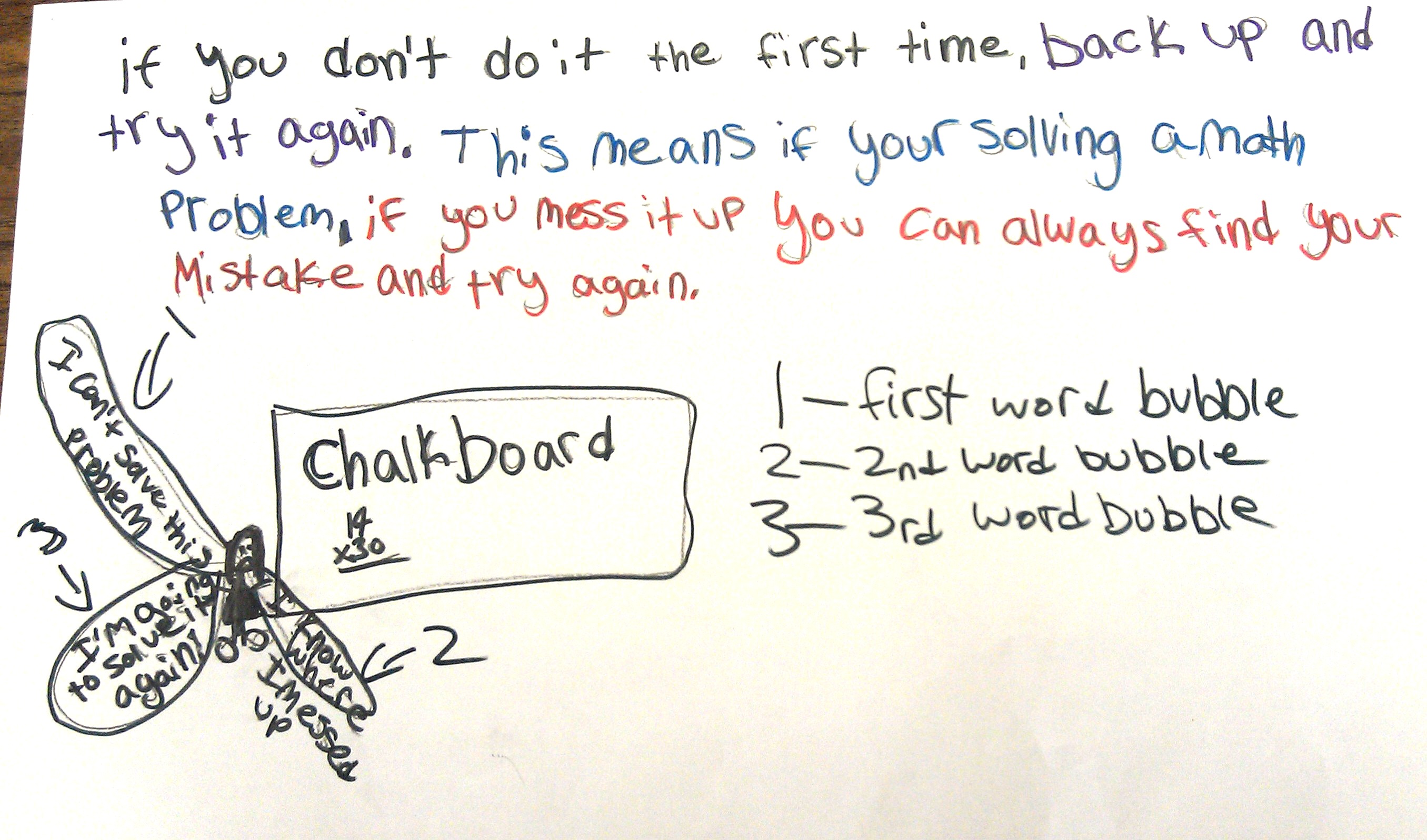
- Does it Make sense?